
|
|
|
|
|
|
Superstars ("Keep 'Em Out?" sidebar)The term “superstar” has suffered watering-down and historical revisionism. When the term was coined in the 1960s, it referred to the five points to on a star. A superstar could hit, run, field, throw, and hit with power. Mickey Mantle, Willie Mays, Frank Robinson, Carl Yastrzemski, and Hank Aaron were superstars. You could make a case for Al Kaline; Tony Oliva and Roberto Clemente were close, but neither ever hit 30 HR. Consistent 30-100-.300 performance was a yardstick for superstars. Harmon Killibrew and Willie McCovey were great sluggers, but not superstars. Ken Boyer and Bill White had all five skills, but fell short of the superstar outfielders in most areas. Calling them superstars because of their positions might have been valid, but they didn’t sustain their greatness like those outfielders, either. By that original definition, Alex Rodriguez, Chipper Jones, Ivan Rodriguez, Jeff Bagwell, Ken Griffey, Jr., Larry Walker, and Sammy Sosa are contemporary superstars. They represent an amazingly full spectrum of positions. You could argue that Rafael Palmiero is a superstar, Bernie Williams is on the borderline, and Barry Larkin was in his prime. Craig Biggio, Derek Jeter, and Roberto Alomar could be considered superstars because of their positions. Nomar Garciaparra, Raul Mondesi, Shawn Green, and Vladimir Guerrero just need to polish one or more of their skills and maintain their performance levels to be true superstars. Bobby Abreu, Carlos Beltran, Fernando Tatis, Magglio Ordoñez, and Scott Rolen are among the leading young players on the path to superstardom.
Perhaps baseball teams decided to copy football’s “draft the best athlete available philosophy.” Starting about 15 years ago, teams started signing “novelty” players; great athletes with tremendous speed and strength who couldn’t play baseball. Juan Samuel, Oddibe McDowell, and Bo Jackson are good examples. Each showed huge potential. They hit home runs and stole bases in the majors, but they couldn’t make contact often, and they never evolved much from their raw-talent level defensively. Barry Bonds is the only speed/power player who became a very good hitter and fielder, while retaining his speed and power. Fans and the media were awestruck by the prodigious talent of the novelty players, even though their performance didn’t equal their raw abilities. They, too, were often called superstars. Of course, in this era of supermodels and the superfund, some announcer won’t hesitate to call Paul O’Neill a superstar. Here’s my speculation about the reasons for the evolution of the term. Bobby Murcer, Bobby Bonds, and Cesar Cedeno had superstar seasons in the early ‘70s, but peaked early (for different reasons in each case), and regressed to role player levels by the ends of their careers. As the 60’s superstars lost their skills, baseball was without true superstars for a while. Instead of coining a new term, the media called players like Reggie Jackson (couldn’t hit for average), Pete Rose (didn’t hit home runs), and Willie Stargell (couldn’t run or field) superstars. As these second-definition-era superstars have become eligible for the Hall-of-Fame, they are especially remembered as superstars, as opposed to stars or just very good players, by younger people who don’t remember the ‘60s superstars in their primes. “Superstar” didn’t make the 1969 edition of the American Heritage Dictionary. The current edition says a superstar is “a widely acclaimed star, as in movies or sports, who has great popular appeal.” A star is just “an artistic performer or athlete whose leading role or superior performance is acknowledged.” The Random House Dictionary describes superstar more bluntly: “a very prominent or successful person, especially a performer or athlete who enjoys great renown and admiration and commands extremely high fees for services.” Random House has contemporary usage pegged. If superstars should become Hall-of-Famers, perhaps salary has become the metric. In 50 years, the superstars of the 00s will start the agents wing of the Hall-of-Fame.
|
|
|
|
|
|


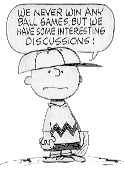 Juan
Gonzalez, Mark McGwire, Mike Piazza, Manny Ramirez, Tony Gwynn, and
Barry Bonds are among the great players who aren’t superstars. If
Bonds could throw, that final playoff game between the Pirates and
Braves might not be over yet. However, with the evolved definition,
courtesy of the media, those players are called superstars. Now,
players, who can hit, run, field, throw, and hit with power are called
five-tool players. Unproven players with skills in all those areas have
five-tool potential.
Juan
Gonzalez, Mark McGwire, Mike Piazza, Manny Ramirez, Tony Gwynn, and
Barry Bonds are among the great players who aren’t superstars. If
Bonds could throw, that final playoff game between the Pirates and
Braves might not be over yet. However, with the evolved definition,
courtesy of the media, those players are called superstars. Now,
players, who can hit, run, field, throw, and hit with power are called
five-tool players. Unproven players with skills in all those areas have
five-tool potential.